Spotify just landed in Rekordbox. Apple Music followed. Suddenly there are tens of millions of tracks sitting inside the software you already use, and the obvious thought is: maybe this changes everything.
It doesn't change the problem most DJs actually have.
What streaming solves
Streaming integration is genuinely useful for a specific set of situations.
You get a request you can't cover. A client needs a track you don't own. You want to audition new music inside your software before buying it. You are playing a casual gig and want the flexibility of a huge catalog without pre-purchasing.
For those moments, streaming is real progress. You no longer have to leave the software to check whether something exists. You can play it, hear it in context, and decide whether it is worth adding to your collection.
That is a legitimate improvement. It solves a catalog problem.
What streaming doesn't solve
The harder problem — the one that gets worse as your collection grows — is different.
You already own the track. You bought it two years ago. It is somewhere in your library. It fits perfectly in the set you are building right now. You just can't find it.
Spotify and Apple Music cannot help with that.
Streaming adds depth to your catalog. It does not help you navigate the depth you already have. And for most serious DJs, that second problem is the one that actually slows down set prep.
The library problem is not a catalog problem
It is worth being direct about this, because the streaming conversation tends to conflate two things that are quite different.
A catalog problem sounds like: "I need a track I don't have."
A discovery problem sounds like: "I know the right track is in here somewhere, but I can't surface it."
The second one is harder. It gets harder the longer you have been buying music. Your collection becomes a place where you know the vibe of what you want, but the path to the specific track is slow and unreliable.
Folders help, up to a point. Search by metadata helps, up to a point. Memory helps, until the collection gets large enough that it starts to work against you.
That is the gap that streaming does not touch.
Where streaming fits in a real workflow
To be fair: the hybrid approach most experienced DJs describe makes sense.
Keep your best tracks, your most-used weapons, and anything you have worked hard to prepare locally. Use streaming for discovery of new music, for unexpected requests, and for auditioning ideas before you commit to a purchase.
The limitations are real, though, and worth knowing before you lean on it.
Spotify streams in Rekordbox require a live internet connection. There is no offline caching. In a club with unreliable Wi-Fi, that is a real risk on a real gig. Cue points and hot loops are limited or unavailable on streamed tracks. You cannot export a streaming playlist to USB for standalone CDJ use. Most services do not offer stems separation, which matters if you mix creatively.
For professional performances, those constraints matter enough that most working DJs still prepare from local files and treat streaming as a supplement, not a foundation.
The local library still needs better discovery
Here is the part the streaming conversation usually misses.
Even if you solve the catalog problem completely — even if every track ever released is available inside your software — you still need a way to navigate what you already know.
The best DJs are not just playing what is new. They are playing what fits. And that often means reaching back into a collection of music that they have lived with for years, sometimes decades, and finding the specific thing that belongs in this set, at this moment.
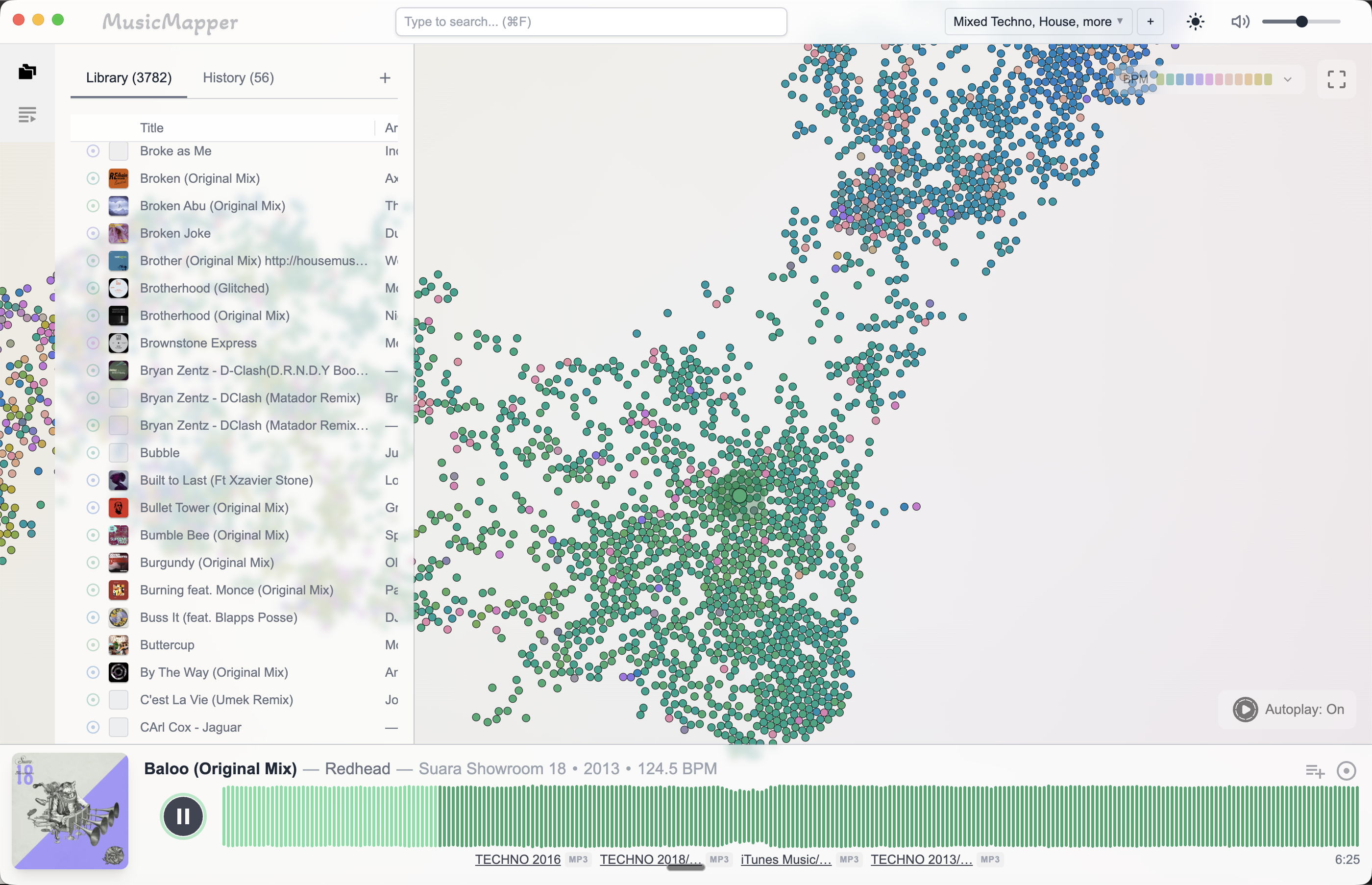
That is a listening and intuition problem, not a catalog problem. And the tools that help with it are not streaming services — they are discovery tools that help you explore a local collection by feel and relationship, not just by text search and memory.
What this means in practice
If you use Rekordbox or Serato and you are excited about streaming integration, use it for what it is good at. Audition new tracks. Cover unexpected requests. Stay inside your software when you are buying new music.
But do not expect streaming to make your local library easier to navigate. That work still happens somewhere else.
A good test: think about the last time you felt stuck during set prep. Was it because you did not have access to enough tracks? Or was it because you could not quickly surface the right one from what you already had?
For most DJs, the answer is the second one. And that is the problem streaming does not touch.
Final takeaway
Streaming integration in DJ software is a useful addition, not a workflow replacement.
It solves the catalog problem. It does not solve the discovery problem.
If your library is large and the hard part of set prep is surfacing what belongs in the set, that is still a local problem — and it still needs a local solution.
For the practical side of that problem, read How to find matching tracks in a large local DJ library and How to prepare a DJ set from your local collection.
Explore MusicMapper
See how the workflow looks on your own music library.
MusicMapper helps you explore a local collection as a visual map, preview similar tracks quickly, and build playlists for sharper set preparation.
Frequently asked questions
Can I use Spotify or Apple Music for DJ set preparation in 2026?
Yes, both are now integrated into Rekordbox and Serato. But streaming tracks carry real limitations — no offline mode for Spotify, no cue point memory, no stems on most services, and no USB export. For professional gigs, local files remain more reliable.
Does streaming replace a local DJ library?
Not really. Streaming solves the catalog problem — finding tracks you don't already own. It doesn't solve the discovery problem — finding the right tracks from what you already have. Most DJs still need both.
Keep Reading
Related articles
Guide
How to Find Matching Tracks in a Large Local DJ Library
When a DJ library gets large, the problem is rarely a lack of good music. The real problem is surfacing the right tracks fast enough. The easiest fix is to stop treating discovery as a folder problem and start treating it as a listening and relationship problem.
Guide
How to Prepare a DJ Set From Your Local Collection
The easiest way to prepare a stronger DJ set from your local collection is to split the work into two stages. First, discover and shortlist. Then organize and finalize. Most DJs create friction when they try to do both jobs at the same time.
Guide
How MusicMapper Fits Into a Rekordbox Workflow
MusicMapper works best before Rekordbox, not instead of it. Use MusicMapper to find matching tracks and shape the shortlist, then move that playlist into Rekordbox for final preparation, export, and performance.